


If you have persistent numbness, tingling, muscle weakness, cramps, or unexplained pain, your doctor may recommend a test called an EMG.
EMG stands for electromyography. It is a diagnostic test used to evaluate how well your muscles and the nerves controlling them are working.
An EMG can help your primary doctor or Neurologists investigate whether symptoms are related to a problem involving the muscles, peripheral nerves, or the communication between nerves and muscles.
If you’ve been scheduled for an EMG, here’s what you should know about the test, why it is performed, and what to expect.
What Is an EMG?
Electromyography (EMG) measures the electrical activity of muscles.
Your nerves send electrical signals that tell your muscles when to contract and relax. When there is a problem with a nerve or muscle, the electrical activity may change.
During an EMG, a healthcare professional records these electrical signals and examines their patterns.
EMG testing is often performed together with a nerve conduction study (NCS). Although the two tests are related, they measure different things.
Why Would a Doctor Request an EMG?
Your doctor may recommend an EMG if you have symptoms that could be caused by a nerve or muscle disorder.
These may include:
- Numbness
- Tingling or a pins-and-needles sensation
- Muscle weakness
- Muscle cramps
- Muscle twitching
- Certain types of arm or leg pain
- Unexplained muscle loss
- Symptoms suggesting nerve compression or damage
An EMG can help your doctor determine whether the problem originates in a muscle, a peripheral nerve, or a nerve root coming from the spine.
What Can an EMG Help Diagnose?
EMG and nerve conduction testing can provide information that helps doctors evaluate several types of neuromuscular conditions.
These may include:
Carpal Tunnel Syndrome
Carpal tunnel syndrome occurs when the median nerve becomes compressed at the wrist.
EMG and nerve conduction studies may help determine whether the nerve is affected and provide information about the extent of the problem.
Pinched or Compressed Nerves
A nerve may become compressed or irritated in the neck, back, arm, wrist, or another part of the body.
Testing may help doctors identify which nerves or nerve roots are affected.
Peripheral Neuropathy
Peripheral neuropathy involves damage to nerves outside the brain and spinal cord.
Patients may experience numbness, tingling, burning sensations, weakness, or other symptoms, particularly in the hands and feet.
Muscle Disorders
EMG testing can help doctors investigate whether muscle weakness may be related to a disorder affecting the muscles themselves.
Certain Neuromuscular Disorders
EMG may also form part of the evaluation for conditions affecting the communication between nerves and muscles or the motor nerve system.
An EMG alone does not necessarily provide a final diagnosis. Your doctor interprets the results together with your symptoms, medical history, physical examination, and other tests.
How Does an EMG Work?
During the EMG portion of the examination, a healthcare professional inserts a very thin needle electrode into selected muscles.
The electrode records electrical activity in the muscle.
You may be asked to relax the muscle and then gently contract it.
The electrical activity is displayed and recorded by the EMG equipment. The doctor examines the patterns to determine whether they are consistent with normal muscle and nerve function or whether further investigation is needed.
Several muscles may need to be tested depending on your symptoms.
Is an EMG Painful?
Patients often ask this before the procedure.
An EMG can cause temporary discomfort because a thin needle electrode is inserted into the muscle.
The sensation varies from person to person. You may feel a brief pinprick when the needle is inserted and some discomfort when the muscle is tested.
After the examination, the tested muscles may feel mildly sore for a short period.
Tell the healthcare professional performing your test if you are uncomfortable during the procedure.
What Is a Nerve Conduction Study?
A nerve conduction study (NCS) measures how quickly and effectively electrical signals travel through your nerves.
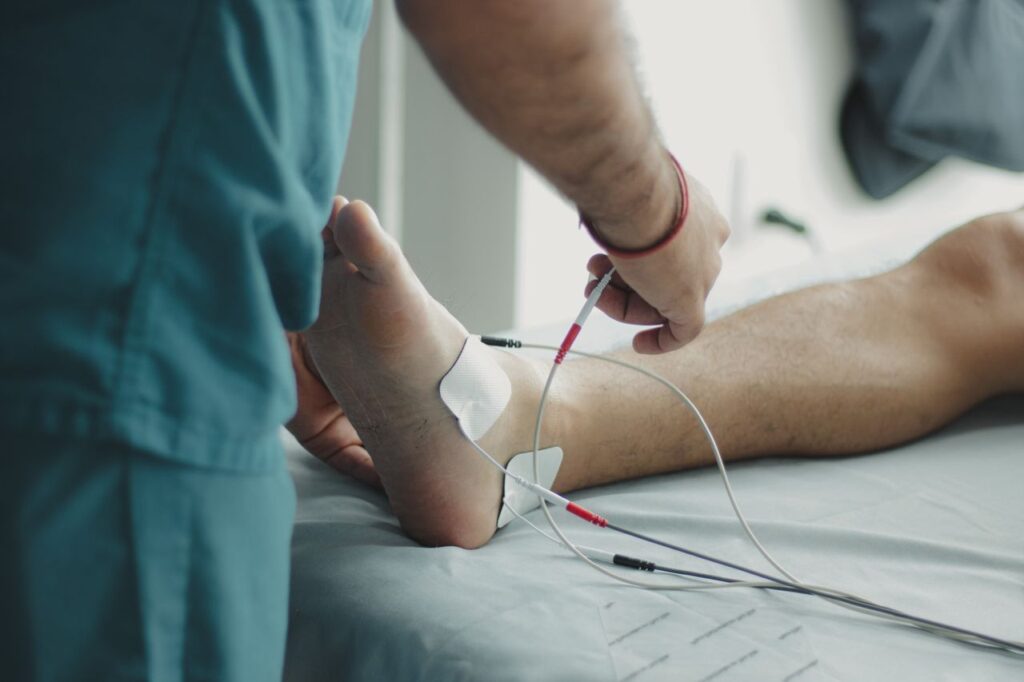
Small electrodes are placed on the skin. A mild electrical stimulus is then applied to a nerve, and other electrodes record the nerve’s response.
The test helps evaluate whether a nerve is transmitting electrical signals normally.
Because EMG and nerve conduction studies provide complementary information, they are frequently performed during the same appointment.
EMG vs. Nerve Conduction Study: What’s the Difference?
The main difference is what each test evaluates.
EMG: Examines electrical activity within muscles and can provide information about the nerves controlling those muscles.
Nerve conduction study: Measures how electrical signals travel through peripheral nerves.
Your doctor may order both tests to obtain a clearer picture of how your nerves and muscles are functioning.
What Happens During an EMG Appointment?
The exact procedure depends on the symptoms being investigated.
If a nerve conduction study is being performed, electrodes are first placed on your skin over specific nerves and muscles. Small electrical impulses may be delivered to measure how your nerves respond.
For the needle EMG portion, a thin needle electrode is inserted into selected muscles.
You may be asked to:
- Relax a particular muscle
- Contract the muscle gently
- Move your arm, leg, hand, or foot
- Change position during the examination
The number of nerves and muscles tested depends on your symptoms and the information your doctor needs.
How Long Does an EMG Take?
The length of the examination varies depending on how many nerves and muscles need to be evaluated and whether both EMG and nerve conduction studies are performed.
Your healthcare provider can give you a better estimate based on the specific examination requested.
Allow additional time for registration, preparation, and any instructions before or after the procedure.
How Should I Prepare for an EMG?
Preparation is generally simple.
Before your appointment:
- Bathe or shower so your skin is clean.
- Avoid applying lotions, creams, or oils to the area being tested.
- Wear loose, comfortable clothing.
- Follow any instructions provided by your healthcare facility.
- Tell your doctor about the medications and supplements you take.
You should also inform your healthcare team if you have a pacemaker or another implanted electrical device.
Tell them if you take blood-thinning medication, have a bleeding disorder, or have another medical condition that may affect the procedure.
Do not stop prescribed medications unless your doctor specifically instructs you to do so.
What Should I Expect After an EMG?
Most people can return to their usual activities after the examination unless their doctor provides different instructions.
You may experience temporary soreness or minor bruising where the needle electrodes were inserted.
The recorded results will be reviewed and interpreted by the appropriate healthcare professional.
Your doctor will then consider the findings together with your symptoms and other medical information.
Depending on the results, further tests, treatment, rehabilitation, medication, or referral to another specialist may be recommended.
EMG vs. MRI: What’s the Difference?
An EMG and an MRI provide very different information.
An EMG evaluates the electrical function of muscles and nerves.
An MRI produces detailed images of structures inside the body, such as the spine, discs, nerves, joints, and surrounding tissues.
For example, an MRI may show a structural problem in the spine that could compress a nerve, while an EMG may help determine whether that nerve is showing signs of dysfunction.
This is why doctors may sometimes request both tests.
EMG vs. ECG: Are They the Same?
No.
Their names sound similar, but they are completely different diagnostic tests.
An ECG or electrocardiogram records the electrical activity of the heart.
An EMG or electromyography evaluates the electrical activity of muscles and the nerves controlling them.
If you are unsure which test your doctor requested, confirm the test name when scheduling your appointment.
Frequently Asked Questions About EMG
Does an EMG involve needles?
Yes. The needle EMG portion uses a thin needle electrode inserted into selected muscles to record electrical activity.
A nerve conduction study, however, primarily uses electrodes placed on the skin.
Does an EMG use electricity?
During a nerve conduction study, small electrical impulses are applied to stimulate specific nerves. During needle EMG, the electrode records electrical activity produced by the muscle.
Does an EMG use radiation?
No. EMG and nerve conduction studies do not use X-rays or ionizing radiation.
Can an EMG detect a pinched nerve?
EMG and nerve conduction studies can provide information that may help identify nerve dysfunction caused by compression or irritation. Results need to be interpreted together with your symptoms, physical examination, and other tests.
Can an EMG detect carpal tunnel syndrome?
Nerve conduction studies, often performed with EMG, are commonly used when evaluating suspected carpal tunnel syndrome.
Can I drive after an EMG?
Most patients can generally resume normal activities after routine EMG testing. However, follow the specific instructions provided by your healthcare team, particularly if other procedures are being performed at the same appointment.
Is an EMG safe?
EMG is generally considered a safe diagnostic procedure. Temporary muscle soreness or minor bruising may occur after needle testing. Tell your healthcare provider about medications, implanted medical devices, bleeding problems, and relevant medical conditions before the examination.
When Should You See a Doctor About Numbness or Weakness?
Occasional tingling after sitting or sleeping in an awkward position may resolve quickly. However, persistent or recurring symptoms deserve medical evaluation.
Consult a healthcare professional if you experience ongoing:
- Numbness or tingling
- Muscle weakness
- Unexplained muscle loss
- Persistent pain associated with numbness or weakness
- Frequent muscle twitching or cramping
- Difficulty using your hands or feet
Sudden weakness or numbness, particularly on one side of the body, can be a medical emergency, especially when accompanied by difficulty speaking, facial drooping, severe headache, confusion, loss of balance, or vision changes. Seek immediate medical attention in these situations.
EMG Testing at Perpetual Help Medical Center – Las Piñas
If you have persistent numbness, tingling, weakness, or other symptoms that may involve your nerves or muscles, your doctor may recommend diagnostic testing such as electromyography and nerve conduction studies.
An EMG can provide valuable information about how your muscles and nerves are functioning and help your healthcare team determine whether additional evaluation or treatment is needed.
If you’re looking for an EMG in Las Piñas, contact Perpetual Help Medical Center – Las Piñas (PHMC) for current information about EMG and nerve conduction testing, schedules, preparation requirements, and other diagnostic services.
Experiencing persistent numbness, tingling, or muscle weakness? Talk to your doctor about whether EMG testing may be appropriate for you.